
Your Next Big Win Awaits at the Casino
Did you know that over 80% of casino gamblers play purely for the thrill, not to win big? Casino gambling works by letting you place bets on games of chance or skill, where the outcome determines your payout. Its main benefit is the exciting rush of risk and reward, making every spin or hand a fresh chance to test your luck. To use it, simply choose a game, set your budget, and enjoy the experience responsibly.
The Allure of the Floor: Understanding the Draw of Modern Gaming Venues
The allure of the floor in modern casino gambling stems from a meticulously engineered sensory environment. The carefully curated soundscape, lighting, and spatial flow are designed to disorient time and encourage continuous play. The layout intentionally lacks clocks and windows, while the rhythmic chimes of slot machines create an auditory feedback loop that rewards action. This physical space eliminates external distractions, immersing the gambler in a self-contained reality where the only horizon is the next spin or hand.
The floor itself functions as a psychological anchor, transforming a financial transaction into a visceral, spatial experience.
By removing reference points, the venue makes it easy to lose track of both time spent and money wagered, focusing attention solely on the immediate moment of play.
Why People Play: Examining the Psychology Behind Risk and Reward
The psychology behind why people play casino games centers on the brain’s response to intermittent reward schedules. Unlike fixed outcomes, unpredictable wins trigger a stronger dopamine release, making the risk itself feel pleasurable. The near-miss effect, where a loss feels close to a win, further fuels engagement by convincing the player that the next outcome is likely. This dynamic balances the sting of a loss against the thrill of a potential reward, creating a cycle where the emotional high of risk-taking often outweighs the logical probability of losing. Players chase the sensation of beating the odds, not just the money.
The Role of Ambiance: How Lighting, Sound, and Design Shape Player Behavior
The deliberate manipulation of ambiance within gaming venues directly guides player behavior. **Strategic environmental design** uses dimmed, warm lighting to create a sense of timelessness and privacy, reducing awareness of elapsed time. Sound design employs the rhythmic chimes and celebratory jingles of wins to generate a dopamine-driven feedback loop, encouraging continued play. Spatial layout, with its maze-like arrangement of machines, promotes exploration, while ergonomic seating reduces physical discomfort. These elements work in sequence to lower cognitive resistance:
- Lighting suppresses temporal cues.
- Sound reinforces reward anticipation.
- Design maximizes dwell time.
Together, they foster a state of immersive focus, known as the “zone,” which prioritizes gambling activity over external distractions.
Myth vs. Reality: Debunking Common Beliefs About House Edge and Luck

Many players believe luck can overcome the mathematical house edge, but this is a myth. The reality is that every casino game has a built-in statistical advantage ensuring long-term profit for the venue, regardless of short-term outcomes. Common misconceptions include thinking a machine is “due” for a win after a losing streak or that previous results influence future spins.
- Each spin or hand is an independent event with fixed probabilities.
- The house edge remains constant, only varying by game rules and player decisions.
- Luck merely dictates short-term variance, not a reversal of the mathematical disadvantage.
Accepting this reality shifts focus from superstition to informed bankroll management.
Decoding the Games: A Guide to Popular Table and Machine Options
Mastering casino gambling begins with decoding the specific rules and odds of each table and machine option. For table games, understanding blackjack’s basic strategy or the pass line bet in craps directly shifts the house edge in your favor. Slot machines require scrutinizing paytables for volatility and RTP percentages before inserting a coin. Video poker offers a rare chance to reduce the house margin through optimal card selection. A common misstep is treating all machines as equal, yet a low-denomination progressive slot often drains your bankroll faster than a high-RTP quarter machine. By comparing these core mechanics across offered games, you bypass luck and engage with the math that dictates long-term outcomes.
Strategic Play vs. Pure Chance: Where Skill Meets the Odds
Success at the casino table often hinges on distinguishing skill-based strategic decisions from pure chance. In blackjack, basic strategy reduces the house edge to under 1%, a direct result of player choices. Conversely, a slot machine’s outcome is entirely random, dictated by a Random Number Generator with no player influence. Poker demands calculated bluffing and reading opponents, while roulette wheels offer no such control. Understanding this divide is crucial: you can master odds in one, but only ride luck in the other.
| Aspect | Strategic Play | Pure Chance |
|---|---|---|
| Player Influence | High; decisions affect outcome | None; result is predetermined |
| Example Games | Blackjack, Video Poker | Roulette, Slots, Craps |
| Skill Impact | Reduces house edge significantly | No impact on long-term odds |
The Mechanics of Slot Machines: Volatility, RTP, and Progressive Jackpots
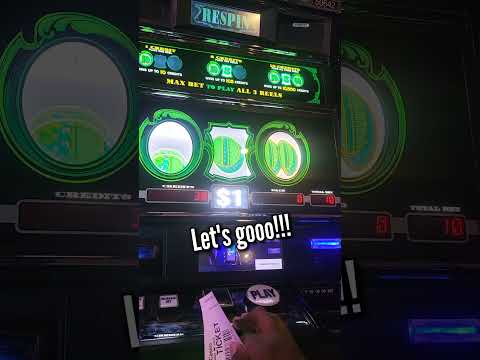
Slot machine mechanics hinge on two core metrics: volatility and RTP. Volatility dictates payout frequency and size—low volatility yields small, frequent wins; high volatility offers rare but massive payouts. RTP, or Return to Player, represents the theoretical percentage wagered returned over time, typically 92–98%. Progressive jackpots pool a portion of each bet across linked machines, growing the top prize until triggered. This jackpot resets to a base amount after a win, while volatility and RTP remain fixed for the base game odds.
Card Games Unpacked: Blackjack, Poker, and Baccarat Dynamics
In card games dynamics, Blackjack relies on a fixed probability model where your decisions—hit, stand, double, or split—are mathematically optimized against the dealer’s upcard, with perfect basic strategy reducing the house edge below 0.5%. Poker shifts to player-versus-player psychology; you must read opponents, manage pot odds, and decide when to fold, call, or raise based on hand strength and table image. Baccarat removes choice entirely—you simply bet on Player or Banker, as the deal follows mandatory drawing rules, with the Banker wager carrying a 1.06% house edge. The sequence for table play:
- Select your game based on whether you want active decision-making (Blackjack), bluffing and reading others (Poker), or pure chance with fixed odds (Baccarat).
- Learn the specific hand values: Blackjack counts cards 2–10 at face value, face cards at 10, and Ace as 1 or 11; Poker uses hand rankings from pair to royal flush; Baccarat scores hands by dropping the tens digit.
- Manage your bankroll per hand, as Blackjack and Baccarat allow flat betting, while Poker requires adjusting to blinds and tournament structures.
Rule of the Wheel: Understanding Roulette Variants and Betting Layouts
The core of Rule of the Wheel: Understanding Roulette Variants and Betting Layouts lies in the house edge difference between European (single zero) and American (double zero) wheels. The single-zero layout offers a 2.7% house edge, while the American version nearly doubles that to 5.26% due to the extra 00 pocket. On the betting layout, inside bets (straight-up, split) offer higher payouts but lower probability, whereas outside bets (red/black, odd/even) cover nearly half the wheel for near-even odds. Understanding this trade-off between variance and layout coverage is essential; French roulette further introduces the “En Prison” or “La Partage” rule on even-money bets, which halves the house advantage on those specific sections of the felt.
| Variant | Layout Feature | House Advantage |
|---|---|---|
| European | 37 pockets (single 0) | 2.7% |
| American | 38 pockets (0 and 00) | 5.26% |
| French | Same as European | 1.35% on even-money bets |
Navigating the House Rules: Etiquette, Limits, and Legalities
Navigating the house rules is your first winning bet. At the table, etiquette means never touching your chips once the dealer announces “no more bets,” and always placing cash on the layout rather than handing it over. Know the posted limits: table minimums are non-negotiable, and betting outside your comfort zone marks you as an amateur. On legalities, you must be of age and cannot use phones at the felt—casinos enforce a strict no-recording policy to protect game integrity.
The real trick is reading the vibe: the pit boss’s nod can stretch a bet limit, but a dealer’s stern look on a mis-chipped wager signals the rule is firm.
Respect these boundaries, and you turn the house’s structure into your advantage.
Table Manners and Tipping Protocols for a Smooth Experience
Mastering table manners and tipping protocols for a smooth experience keeps the game flowing and staff happy. Always use one hand to handle chips and cards, never touch your bet once cards are dealt, and wait for the dealer’s signal before taking your hand away. Tip consistently by placing a small bet for the dealer or pushing a chip forward after a winning hand—this builds goodwill without breaking your rhythm. Avoid distractions like phones at the felt, and never criticize another player’s strategy aloud.
How Betting Minimums and Maximums Affect Your Session
Betting minimums and maximums dictate the pace and risk of your session. A low table minimum allows you to stretch a small bankroll, buying more hands or spins per hour. Conversely, a high maximum permits aggressive progression systems, but also exposes you to severe, rapid losses if the streak goes cold. You must align the table’s spread with your bankroll’s depth. Sitting at a $25 minimum table with only $200 forces you into low-probability “hit-and-run” play. Always check the sign: the range defines how long your money lasts and how much volatility you can realistically absorb.
Not all limits are equal. The table below shows how the same bankroll behaves differently under distinct betting ranges.
| Bankroll | Table Limits | Session Impact |
|---|---|---|
| $500 | $5–$500 | Allows moderate bet sizing; you can weather losing streaks. |
| $500 | $25–$500 | Forces larger base bets; volatility spikes, and losing streaks end the session quickly. |
Age Restrictions, ID Checks, and Regional Regulatory Variations
Before you step onto the casino floor, understand that **age restrictions vary drastically by jurisdiction**—the legal gambling age is typically 18 in the UK but jumps to 21 in most U.S. states, and Macau enforces a strict 21+ rule. ID checks are non-negotiable; casinos perform mandatory, real-time verification at entry and cash-out points, scanning licenses or passports to ensure compliance. Regional quirks amplify this: in Nevada, you can gamble at 21 even in a bar, but in Atlantic City, some areas permit 18-year-olds to play slots but not table games. Always carry a valid physical ID, as digital copies are universally rejected.
- Legal gambling age ranges from 18 to 21 depending on the country or state; verify locally before traveling.
- ID checks occur at entry, when exchanging chips, and during any cash-out over a small threshold.
- Some regions enforce separate age limits for different game types, like 18 for slots but 21 for blackjack.
- Foreign visitors may need a passport for ID checks, as driver’s licenses from other countries are sometimes declined.
Bankroll Management: Strategies for Sustainable Play
Effective bankroll management is the bedrock of sustainable casino play, turning a volatile pastime into a calculated endeavor. First, set a strict session budget you are willing to lose entirely, never chasing losses by dipping into rent or savings. Divide this bankroll into small, equal betting units—for example, 1% to 2% of your total per wager—to weather inevitable losing streaks without busting out. Establish clear win and loss limits for each session, such as walking away after doubling your bankroll or losing half of it, which protects profits and curbs impulsive decisions. True mastery lies in treating your bankroll as a tool for maximizing entertainment hours, not a shortcut to escape financial reality. By enforcing these rigid boundaries, you transform casino gambling from a reckless gamble into a disciplined, extended experience.
Setting Stop-Loss and Win-Limit Goals Before You Sit Down
Before engaging in any casino session, you must predetermine your stop-loss and win-limit goals to enforce discipline. A stop-loss is the absolute maximum you will lose; this cap prevents chasing losses and protects your bankroll from rapid depletion. Simultaneously, a win-limit defines the profit threshold at which you will walk away, locking in gains and avoiding the psychological trap of giving back winnings. These hard boundaries remove emotion from decision-making, turning bankroll management into a logical, pre-set rule rather than an impulsive reaction during play.

| Goal Type | Definition | Primary Function |
|---|---|---|
| Stop-Loss | Maximum loss amount per session | Prevents catastrophic bankroll erosion |
| Win-Limit | Profit target for exiting the session | Secures winnings and prevents overtrading |
Choosing Games with the Best Odds for Your Budget

Choosing games with the best odds for your budget is the sharpest move you can make in a casino. Prioritize table games with a low house edge, like baccarat or craps, over fast-paced slots that drain your bankroll. To stretch your funds further, follow this sequence:
- Focus on low house edge games to maximize potential returns per bet.
- Select blackjack or video poker variants offering the best rules for your stake.
- Adjust your bet size to the table minimum, preserving your bankroll for more rounds.
This strategy directly matches your budget with statistical advantages, keeping you in the game longer.
Avoiding Common Pitfalls: Chasing Losses and Over-Betting
Chasing losses is a critical error where you increase bets to recover prior deficits, often accelerating financial damage. Over-betting occurs when wagers exceed your predetermined unit size, undermining bankroll longevity. To avoid these, set strict limits before any session and adhere to them regardless of short-term outcomes. The most effective safeguard is discipline in bet sizing, ensuring each wager remains a fixed percentage of your total funds. Never deviate from this plan to “win back” money.
Chasing losses and over-betting destroy bankrolls; stick to fixed bet sizes and session caps to preserve sustainability.
Digital Shifts: Comparing Land-Based Venues with Online Platforms
The core digital shift in casino gambling replaces tactile chips and ambient noise with instant, algorithm-driven access. Land-based venues rely on physical presence—the weight of a slot lever, the dealer’s gaze—creating a slow, sensory-communal rhythm. Online platforms reverse this, compressing decision time into milliseconds, where auto-play functions and dynamic multipliers accelerate every hand or spin. Unlike a brick-and-mortar floor where you must walk to a table, a digital interface offers parallel tables at once, shifting focus from atmospheric immersion to pure throughput. This comparison of venues reveals a trade-off: physical casinos trade speed for social ritual, while online platforms trade ambiance for exponential session frequency.
Live Dealer Innovations: Bringing the Floor Experience to Your Screen
Live dealer innovations collapse the distance between a brick-and-mortar floor and your living room by streaming real-time action from a studio. You watch a professional croupier spin the roulette wheel or deal blackjack in hi-def, with multiple camera angles letting you zoom in on the felt just like you would at a table. Interactive chat features let you speak directly to the dealer, mimicking the banter that defines a physical pit. A clear sequence unfolds: you place your bets via an on-screen interface, the dealer acknowledges you by name, the cards fall live, and the win—or loss—feels immediate and personal.
- Choose a game—roulette, blackjack, or baccarat—from the lobby
- Place your digital chips while watching the dealer shuffle in real time
- Send a quick message to the dealer as the outcome resolves
Bonuses, Promotions, and Wagering Requirements in Virtual Play
In virtual play, casinos offer sign-up bonuses and free spins to attract players, but these come with strict wagering requirements that dictate how many times you must bet the bonus before withdrawing winnings. A common trap is high playthrough rates, often 30x–50x, which can drain your bankroll. Always check the terms: some games contribute less to wagering, and time limits apply.
Q: Why do wagering requirements on bonuses often make it hard to cash out?
A: They force you to risk the bonus multiple times, turning a promotional perk into a high-stakes hurdle before you see real money.
Mobile Gaming Trends: Accessibility vs. Distraction
Mobile gaming transforms casino access into an always-on opportunity, yet its constant availability creates a fine line between convenience and cognitive overload. Players enjoy instant slot spins or blackjack hands during commutes, but the lack of physical separation from the game amplifies distraction—tapping a notification can hijack focus from work or relationships. Instant-play casino access rewards flexibility while demanding self-regulation, as the same device that schedules meetings now hosts high-stakes bets. How can a player maintain focus when the casino lives in their pocket? Setting time limits and disabling push alerts during critical hours helps contain the distraction while preserving accessibility’s core benefit.
The Financial Side: Revenue Streams and Economic Impact
Casino gambling primarily generates revenue through the house edge, a statistical advantage built into every game that ensures long-term profitability from player wagers. Slot machines and table games contribute the bulk of this income, with high-volume play from frequent gamblers often accounting for a disproportionate share. The economic impact of this revenue stream extends to local employment, as casinos staff dealers, security, and hospitality roles. Additionally, tax revenue from casino operations can fund public services, though the financial burden on problem gamblers and related social costs may offset these public benefits.
How Establishments Generate Profit: House Advantage and Payout Structures
Casino profit hinges on the house advantage, a built-in mathematical edge ensuring every game favors the establishment over time. Payout structures are calibrated to this edge—for every $100 wagered on slots, the machine might only return $92, keeping $8 as pure revenue. Roulette’s single-zero wheel offers a 2.7% house edge, while blackjack’s edge hovers around 0.5% for perfect play. This imbalance means the casino never bets against players; it simply collects a fraction of every wager, turning high-volume action into consistent profit.
| Game | House Advantage | Typical Payout Structure |
| Slots | 2%–15% | Random jackpot returns, lower ratio for base wins |
| Roulette (single-zero) | 2.70% | 35:1 on straight bets, reduced odds for outside bets |
| Blackjack | ~0.50% with optimal strategy | 1:1 standard, 3:2 for blackjack |
| Craps (pass line) | 1.41% | 1:1 with no odds leverage |
Taxation Models for Player Winnings and Operator Earnings

Taxation models for player winnings and operator earnings form a dual framework that directly impacts net returns for both parties. Players typically face withholding taxes on prizes above a threshold, reducing their take-home amount. Operators, meanwhile, pay a percentage of gross gaming revenue (GGR) rather than net profit, affecting operator payout calculations. This structure creates distinct financial incentives: players must account for tax liabilities in their session budgets, while operators adjust house edge to sustain margins after tax deductions.
- Player winnings exceeding a set amount are subject to mandatory tax withholding at the point of payout.
- Operator earnings are taxed on total bets minus winnings, not on net income.
- High withholding rates can discourage large bets by reducing effective returns for players.
- Tax credits or deductions may apply for players who report gambling losses against winnings.
Local Economies: Job Creation, Tourism, and Infrastructure Effects
Casino gambling often stimulates local economies by generating direct employment opportunities in gaming, hospitality, and security, while also creating indirect jobs in supply chains and local services. The influx of visitors for gambling boosts tourism revenue, filling hotels, restaurants, and entertainment venues. This increased traffic can pressure local infrastructure, sometimes leading to road upgrades and expanded public transit funded by casino taxes, though it may also strain utilities and law enforcement resources. Sustained tourism and job growth depend on the casino’s ability to attract non-local spenders, as local gambling tends to recirculate limited funds.
Job creation and tourism from casinos can revitalize local businesses, but the resulting infrastructure demands often require careful planning to avoid overburdening public services.
Responsible Participation: Healthy Habits for Frequent Visitors
For the frequent visitor, responsible participation isn’t a rulebook—it’s a rhythm. Healthy habits like setting a strict time limit before you walk past the slot banks keep the visit from bleeding into exhaustion. One regular I know always cashes out his first small win and pockets it, treating that slip like a mental anchor. He told me,
“Once that envelope is in my jacket, the rest is just play—win or lose, I’ve already won my night.”
Another trick is to schedule a mid-session coffee break away from the tables; it resets your focus and stops the chase from feeling like a necessity. The key isn’t avoiding the thrill—it’s refusing to let the thrill rewrite your rules. Frequent play becomes sustainable when you treat each visit as a planned event, not an endless drift.
Recognizing Warning Signs of Problematic Behavior
Frequent visitors should monitor for early behavioral red flags, like chasing losses or lying about time spent. Key warning signs include increased bet sizes to feel excitement, borrowing money, or neglecting responsibilities. Ask yourself: Do you get irritable when unable to gamble? That emotional spike often masks a deeper issue. Spotting these signals early lets you adjust habits before control slips. Remember, a healthy relationship with gambling means leaving when the fun fades. Self-awareness is your first defense—if the trip to the casino feels urgent rather than recreational, pause and reflect.
Tools for Self-Control: Budgeting Apps and Time Limits
Budgeting apps let you set a strict gambling spend before you even open a casino site, so you only lose what you decide. Use time limit features on your phone or directly in your casino account to force logouts after an hour. This stops those “just one more spin” traps cold.
Q: Do budgeting apps actually work for casino spending?
Yes, but only if you enter your total monthly fun money—not your rent—and never bypass the limit you set.
Resources for Support: Helplines, Counseling, and Community Programs
For frequent visitors, responsible gambling resources provide a safety net. Helplines like 1-800-GAMBLER offer immediate, confidential crisis support. Professional counseling helps address underlying behavioral patterns, while community programs create peer-led accountability groups. These services prevent harm before it escalates. Accessing support early reinforces healthy participation, not failure.
- National helplines operate 24/7 for anonymous crisis intervention.
- Certified counselors specialize in gambling-specific cognitive behavioral therapy.
- Local peer-support meetings offer non-judgmental, shared-experience guidance.
- Self-exclusion program coordination is often included in community support services.
Future Horizons: Emerging Trends and Technology in the Industry
The future of casino gambling is all about immersive, personalized play. AI-driven game customization will learn your habits, adjusting difficulty and bonus triggers in real-time. You will see haptic feedback chairs and volumetric projection tables creating a physical presence for digital dealers. Biometric wearables might replace loyalty cards, letting the floor know your favorite drink and game without a glance at a screen.
The real game-changer is predictive behavioral engineering within the slot software itself, subtly altering volatility to keep you engaged longer.
Expect extended reality (XR) headsets to blend the Vegas strip directly into your living room carpet, making the line between online and land-based casinos nearly invisible.
Cryptocurrency Integration: Privacy and Speed in Transactions
Cryptocurrency integration directly alters transaction mechanics by enabling near-instantaneous deposits and withdrawals that bypass traditional banking delays. Players experience enhanced privacy as blockchain wallets replace personal financial details, with no requirement for submitting ID or bank statements for each transaction. This shift allows for anonymous betting transactions that settle in minutes rather than days, eliminating the friction of manual verification processes. Smart contracts further automate payouts, removing intermediary delays when cashing out winnings, which streamlines the entire gambling cycle from deposit to withdrawal without exposing user identities.
Crypto integration delivers speed by settling bets and cashouts in minutes instead of days, while privacy is achieved through wallet-based transactions that keep personal banking details off the casino’s records.
Virtual Reality Environments: Immersive Worlds and New Game Mechanics
Virtual reality environments transform casino gambling by placing players inside fully realized, interactive worlds. Instead of flat screens, users walk through a digital casino floor, pulling slot levers with motion controllers. New game mechanics emerge from this spatial immersion, such as physically reaching to place chips on a blackjack table or ducking behind cover in a VR poker room. A clear sequence introduces players to enhanced gameplay:
- Equip a VR headset and handheld controllers to enter a 3D lobby.
- Navigate using hand gestures or joystick movement to select a game table.
- Interact with spatial game mechanics, like tossing dice or spinning a roulette wheel with realistic physics.
AI-Powered Player Analytics and Personalized Experiences
AI-powered player analytics process real-time gambling data to tailor individual gameplay, adjusting slot volatility, table limits, or bonus triggers based on behavioral patterns. This creates adaptive gaming environments where algorithms predict preferred risk levels, session lengths, and game genres, then dynamically modify the interface or reward schedules. This shifts the experience from static entertainment to a reactive, psychologically calibrated loop. The result is a frictionless, custom-flow that increases engagement without overt marketing.
- Optimal difficulty curves are computed for each player to maintain challenge without frustration.
- Personalized notification timing reduces addictive triggers while boosting return visits.
- Game rules discreetly adjust to mirror casinous a user’s proven tolerance for variance.